
Areas Covered
Hourly Home Care in Mirfield
Mirfield sits in the Calder Valley, part of the Kirklees borough of West Yorkshire, tucked between Huddersfield and Dewsbury. It’s a town with a strong sense of community and a lot of long-standing residents, which means many local families are already juggling jobs, school runs and their own households while trying to keep an eye on a parent or partner nearby. Hourly home care from The Care Collection is built for exactly that situation: visiting care with a minimum call length of one hour, arranged around a schedule that suits your family rather than a fixed slot dictated by a rota. Whether you need a short daily check-in, help getting up and dressed in the morning, or several visits a day for someone living with dementia, the care is shaped around the person, not the paperwork.
What Hourly Home Care Covers
Hourly care is deliberately flexible, which is what makes it different from live-in or residential care. A typical package from our hourly home care service might combine several of the following, in whatever mix suits the person receiving support:
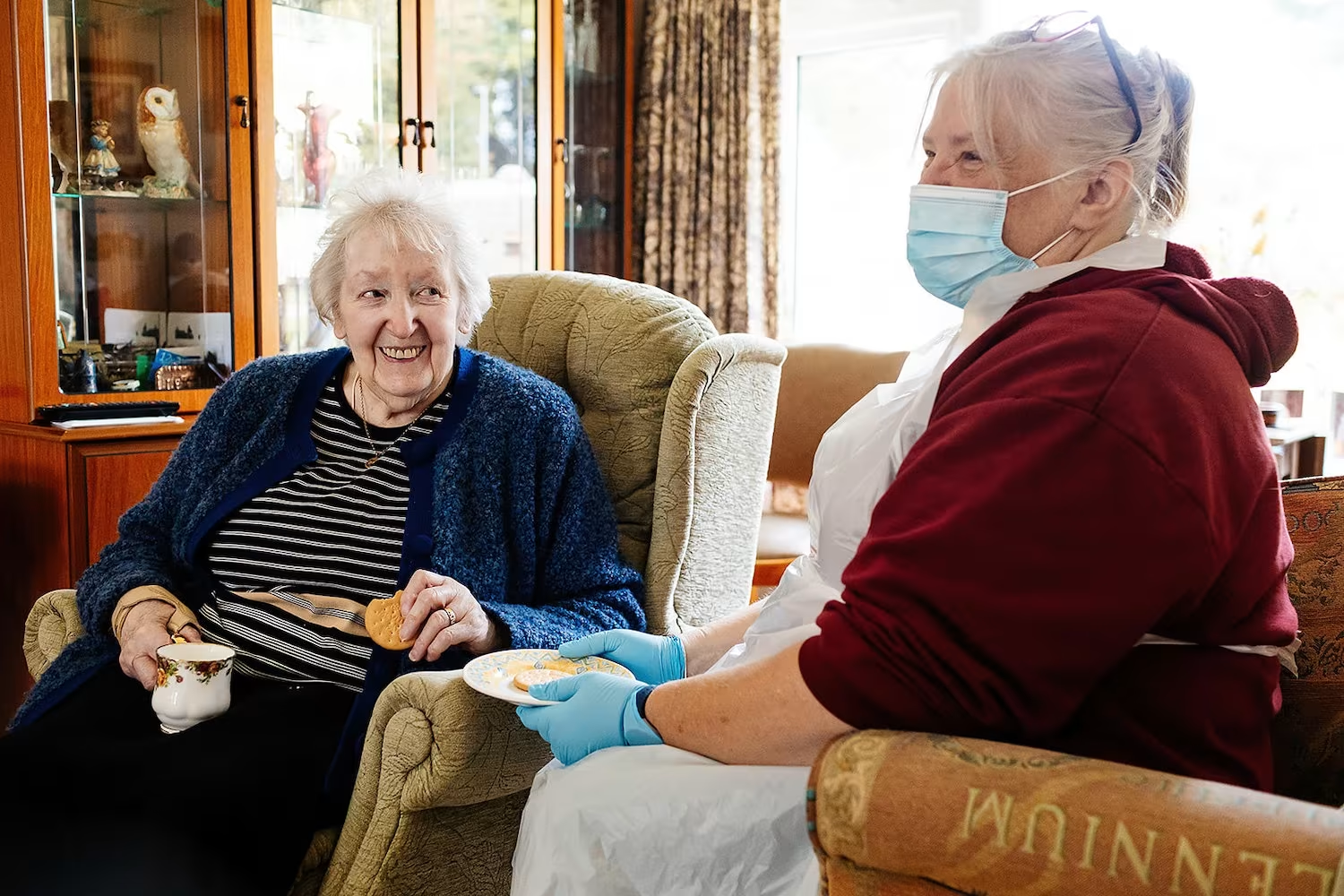
- Companionship – conversation, shared activities, and simply having someone present, aimed at reducing the loneliness and isolation that can creep in when someone spends most of their day alone.
- Domestic support – cleaning, laundry, and the everyday household tasks that become harder to manage with age, illness or reduced mobility.
- Personal care – discreet, dignified support with washing, dressing and continence, delivered in a way that respects the person’s privacy and preferences.
- Complex care – support for conditions such as dementia, multiple sclerosis, motor neurone disease, and brain or spinal injury, where carers need specific training and a consistent, informed approach.
- Skills enhancement – practical support that helps someone build or rebuild independence and confidence, rather than doing everything for them by default.
Because visits are hourly rather than fixed to short, timed slots, there’s room for an actual conversation, a proper cup of tea, or the time it genuinely takes to help someone get washed and dressed without rushing. That difference matters more than it sounds. Rushed visits are one of the most common complaints families have about home care generally, and a longer minimum call is a direct, practical answer to it.
Visit frequency and timing are agreed with the family, not fixed by us. Some clients need a single morning call to help with getting up, medication prompts and breakfast; others need visits spread across the day, for example a morning call, a lunchtime check-in and an evening visit to help with settling for the night. Where someone is living with more advanced needs, several shorter visits a day can sit alongside longer calls, and the balance can be adjusted as circumstances change, whether that means stepping support up after a hospital stay or a fall, or scaling it back once someone has recovered confidence. Hourly care can also work well as planned respite for a family carer who needs a few hours, or a regular weekly slot, to themselves, without having to arrange anything more permanent than they actually need.
Care Delivered Locally, Coordinated Properly
The Care Collection doesn’t operate a branch office in every town it covers, and we won’t pretend otherwise. What we do have are carers who live in or near Mirfield and the surrounding Kirklees area, employed directly by us (not subcontracted through an agency), trained by us, and matched to local clients based on need, personality and location. Care is delivered in your own home, at your own pace, with the administration and clinical oversight coordinated through our registered offices, the nearest being our Kirklees head office in Honley.
Wherever possible, we build a regular, consistent team around each client, rather than sending a different face for every visit. For someone with dementia in particular, or simply for an older person who values familiarity, that continuity is often the single biggest factor in whether care feels reassuring or unsettling. It also means carers get to know the small things that matter: how someone likes their tea, which stairs need extra care, what the daily routine actually is, not just what’s written on a form.
Every carer who works for us goes through an induction that covers moving and handling, medication support, safeguarding, first aid and infection control before they visit a client unsupervised, along with an enhanced DBS check. Where a client’s needs call for it, for example tracheostomy care, PEG feeding, or supporting someone with a specific neurological condition, carers receive additional training matched to that person, rather than being expected to learn on the job. Field care supervisors carry out regular spot checks and reviews with clients and families, so that if something in a care plan isn’t working, whether that’s timing, tasks, or the personal fit between carer and client, it gets picked up and adjusted rather than left to drift.
Who Hourly Home Care Supports
Hourly care isn’t only for older adults, although it’s most commonly associated with helping people aged 65 and over remain safely and comfortably in their own home rather than moving into residential care. We also support younger adults aged 18 to 65 living with disabilities, long-term health conditions or recovering from injury, and children aged 0 to 17 through a dedicated paediatric-trained team. In each case, the starting point is the same: an honest conversation about what support is actually needed, followed by a care plan built around that, not a generic package applied regardless of circumstance.
For families in Mirfield weighing up the options, hourly care often sits between two extremes: doing everything yourselves, which is rarely sustainable long-term, and a full move into a care home, which isn’t always necessary or wanted. For many older adults, the right level of hourly support at home is a genuine, life-enhancing alternative to residential care, allowing them to stay in familiar surroundings, keep their routines, and retain a level of independence that a care home setting can’t always offer.
Why Families Choose The Care Collection
The Care Collection was founded in 2016 by Catherine Haigh, who brings over 30 years of professional experience across elderly care, dementia, physical disabilities, brain and spinal injury, mental health, neurological conditions, learning disabilities and palliative care. She also has personal, lived experience of care within her own family, which shaped the way the company was set up: carer-first, family-honest, and built around consistency rather than volume. There’s more about The Care Collection and how it works if you’d like the fuller picture.
That approach is reflected in independent evidence, not just in how we describe ourselves. The Care Collection is registered with and rated “Good” by the Care Quality Commission across all five assessed areas. We’ve been named a Top 20 Home Care Provider in Yorkshire and The Humber by homecare.co.uk for two consecutive years, and our average client review score sits between 9.7 and 9.9 out of 10 from more than 60 verified reviews. You can see our awards and testimonials in full elsewhere on our site. We’re also a full member of the Kirklees and Calderdale Care Association and listed as an approved provider on NHS provider directories.
None of that replaces hearing directly from families we’ve supported:
“Catherine and her team are a top class care service. My aunt and myself are delighted with the high quality care and support we receive. Always pleasant, friendly and communicative.” – niece of a client, aged 95
“The Care Collection have been absolutely wonderful with my Dad.” – daughter of a client
What to Expect, From Enquiry to First Visit
Starting care for yourself or a family member is a significant decision, and it’s normal to feel unsure where to begin. The process is designed to be straightforward and unhurried:
- Get in touch. Request a quote through our website, get in touch with our team, or email office@thecarecollection.co.uk. There’s no obligation at this stage, it’s simply a conversation.
- A conversation about needs. Usually by phone, we talk through what support is actually needed, how often, and what matters most to the person receiving care, whether that’s routine, personality fit, mobility, or specific medical knowledge. This is also the point to raise practical questions, including timescales and cost.
- A home visit and assessment. Where it’s helpful, a member of our team visits the home to meet the person receiving care, see the layout of the property, and talk through any risks or equipment needs, such as hoists, rails or specific mobility aids, before anything is finalised.
- A care plan is built. Based on that conversation and assessment, we put together a written plan that sets out what each visit covers, in what order, and what matters to that individual, reflecting real circumstances rather than a standard template.
- Carer matching. We match carers to the client based on location, skills and personal fit, aiming for consistency from the outset rather than rotating staff while things “settle in”.
- Care begins. Visits start as agreed, with ongoing oversight from our compliance and wellbeing teams, including periodic reviews and spot checks, to make sure the plan continues to fit as needs change.
If you’re still deciding whether hourly care is the right fit, or comparing it against other options, our team is happy to talk it through honestly, including situations where hourly care might not be the best answer yet. That conversation costs nothing and commits you to nothing.
Taking the Next Step
If you’re supporting a parent, partner or family member in Mirfield and trying to work out what good, reliable care actually looks like, the most useful next step is usually a short conversation rather than more research. Get a quote, ask the questions that are actually on your mind, including anything about paying for care, and judge us on how clearly we answer them.
FAQs
What is the minimum length of a home care visit?
The Care Collection's hourly home care has a minimum call length of one hour. This is longer than the short, timed slots used by some providers, which allows carers to complete personal care, domestic tasks or companionship visits without rushing.
Is hourly home care available in Mirfield?
Yes. The Care Collection supports families across Mirfield and the wider Kirklees area with hourly home care, delivered by carers who live in or near the local area. Care is coordinated through our registered offices, with the nearest being our Kirklees head office in Honley.
Will the same carer visit each time?
We build a regular, consistent carer team around each client wherever possible, rather than sending a different person for every visit. This continuity is particularly important for people living with dementia or anyone who values familiarity.
What kind of support can hourly care provide?
Hourly care can cover companionship, domestic support such as cleaning and laundry, personal care including washing, dressing and continence support, complex care for conditions such as dementia, MS or brain and spinal injury, and support to build independence and confidence. A care plan is built around whichever combination the person actually needs.
Does The Care Collection support younger adults and children, or only older people?
We support older adults aged 65 and over, younger adults aged 18 to 65 living with disabilities or long-term conditions, and children aged 0 to 17 through a dedicated paediatric-trained team.
Are carers employed directly by The Care Collection?
Yes. All carers are directly employed, trained and supported by The Care Collection. They are not agency staff or subcontractors, which supports consistency and accountability in the care provided.
Is The Care Collection regulated and rated?
Yes. The Care Collection is registered with the Care Quality Commission (CQC) and is rated 'Good' across all five assessed areas. The company has also been named a Top 20 Home Care Provider in Yorkshire and The Humber by homecare.co.uk for two consecutive years.
How do I know if hourly care is better than a care home for my relative?
For many older adults, hourly care at home is a genuine alternative to a care home, allowing them to stay in familiar surroundings and retain independence. It won't be the right fit for every situation, and our team will discuss your specific circumstances honestly, including if a different level of support would suit better.
How much does hourly home care cost?
Costs depend on the level and frequency of support needed, so we don't quote a single flat figure here. Full detail is available on our costs of hourly home care page, and a personalised quote can be arranged by getting in touch with our team.
What happens after I make an enquiry?
We start with a no-obligation conversation about what support is needed, then build a care plan and match a carer (or small consistent team) based on location, skills and personal fit. Care begins once the plan and schedule are agreed, with ongoing oversight from our compliance and wellbeing teams.