
Areas Covered
Hourly Home Care in Lepton
Lepton sits in the Kirklees borough of West Yorkshire, a few miles from Huddersfield, with the kind of settled, semi-rural feel that makes people want to stay put as they get older rather than move away from family and familiar surroundings. That’s the exact situation hourly home care is designed for: support that comes to you, on a schedule built around your life, rather than asking you to fit into somebody else’s routine. The Care Collection provides visiting care across Kirklees with a minimum call length of one hour, delivered by directly employed carers who live in or near the area they support.
What Hourly Home Care Actually Involves
Hourly care is the most flexible form of home care we offer. Instead of a fixed care package, visits are built around what a person and their family actually need, whether that’s a single hour a day for medication prompts and a check-in, several visits spread across the week, or a more involved daily routine, and it sits alongside our hourly home care service offered across the wider region. There’s no minimum contract pushing people into more care than they want, and no fixed slot forcing a routine that doesn’t suit them.
That flexibility also means the pattern of visits can change as life changes. A family might start with one hour, three mornings a week, to help someone get up, washed and dressed, then add an evening call once a partner returns to work, or step visits up temporarily after a hospital discharge before scaling back down again. The schedule is reviewed and adjusted with the family rather than fixed in place on day one, so it keeps pace with what’s actually needed rather than what was needed six months ago.
A typical hourly care visit might combine a couple of these elements, or focus on just one:
Companionship
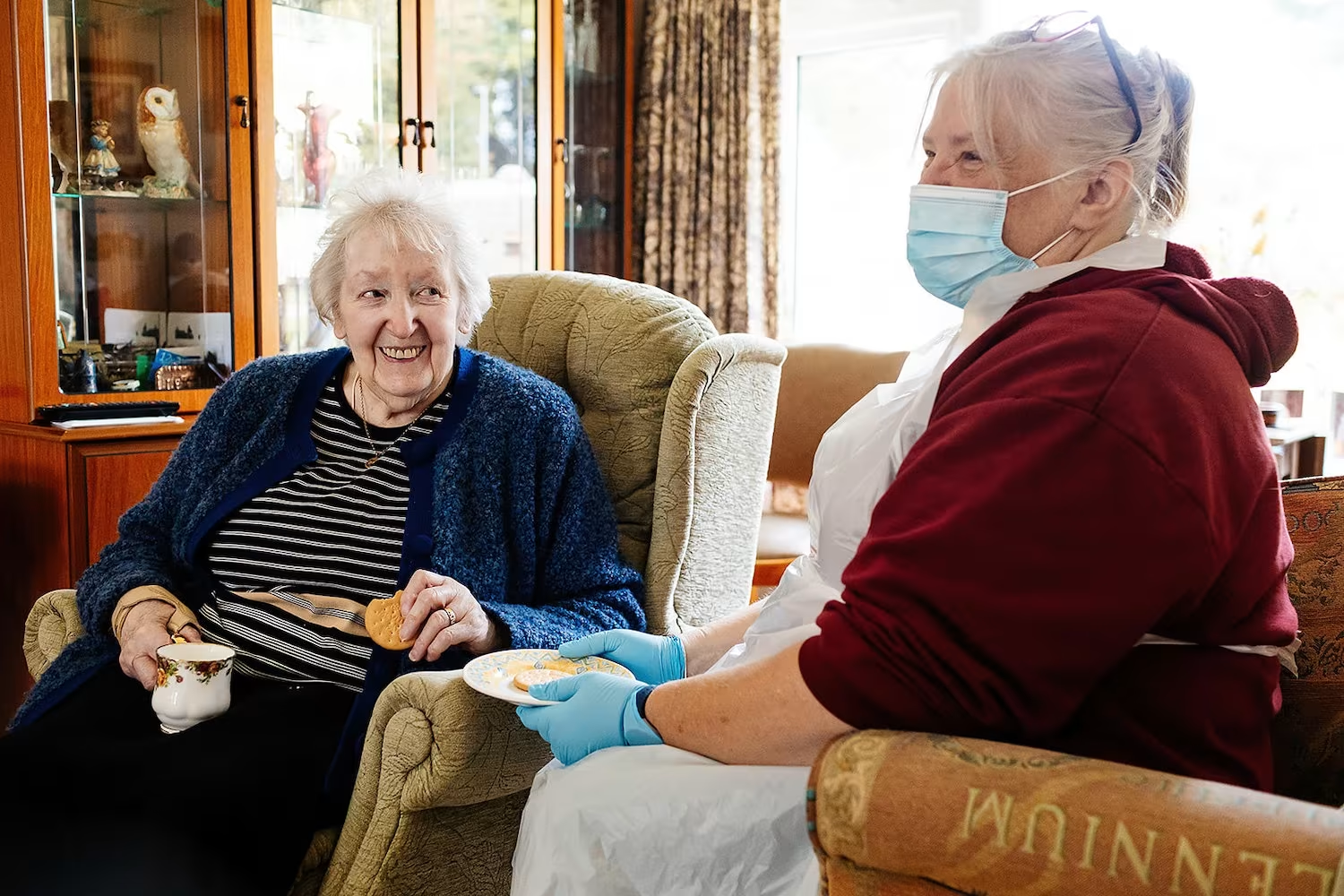
For anyone spending long stretches of the day alone, a regular visit from a familiar carer, someone to talk to, share a cup of tea with, or accompany on a short outing, can make a genuine difference to mood and wellbeing. Loneliness is one of the most common, and most overlooked, reasons families first look into home care.
Domestic Support
Practical help around the house, cleaning, laundry, changing bedding, keeping the kitchen and bathroom in order, so that a home stays comfortable and safe without becoming a source of stress or physical strain.
Personal Care
Discreet, dignified support with washing, dressing, continence care, mobility assistance and prompting or supporting with medication, delivered by carers trained to protect both privacy and self-respect. This is often where families feel most anxious about “a stranger” being involved, which is exactly why continuity of carer matters so much, and why carers take time to learn how someone likes things done rather than simply following a checklist.
Complex Care
For conditions such as dementia, Parkinson’s, MS, motor neurone disease, or the after-effects of a brain or spinal injury, hourly visits can be tailored to the specific demands of that condition, working alongside any professional healthcare input already in place.
Skills Enhancement
Some clients don’t need things done for them so much as support to keep doing things themselves: rebuilding confidence after a fall, a hospital stay, or a change in circumstances, and gradually regaining independence rather than losing it.
Care for Every Stage of Life
Hourly care isn’t only for older adults, although it’s frequently chosen by people over 65 who want to stay in their own home rather than move into residential care, and by families looking for a genuinely life-enhancing alternative to that decision. It also supports younger adults aged 18 to 65 living with disability, injury or long-term illness, and children aged 0 to 17 through a dedicated paediatric-trained team. Whatever the age, the same principle applies: care built around the person, not the other way round.
Carers Who Know the Area
Care for families in Lepton is coordinated through The Care Collection’s registered offices in Kirklees, Calderdale and Wakefield, but the carers themselves live in or near the communities they work in. That local knowledge matters more than people expect. It’s easier to plan around, easier to build a genuine relationship with, and it means a carer isn’t spending half of every visit stuck in traffic. Wherever possible, we aim for the same small team of carers to visit consistently, rather than a rotating cast of unfamiliar faces, because continuity is one of the biggest factors in how safe and settled a client feels.
Every carer goes through an enhanced DBS check, reference checks and a structured induction before working unsupervised, followed by ongoing training that covers areas such as moving and handling, medication support, dementia awareness and safeguarding. Because carers are directly employed rather than supplied through an agency, they’re supervised, appraised and supported by the same organisation from day one, which makes it easier to maintain consistent standards and to act quickly if a family raises a concern.
Regulation, Track Record and Real Reviews
The Care Collection was founded in 2016 by Catherine Haigh, who brought over 30 years of professional experience across elderly care, dementia, physical disability, brain and spinal injury, mental health, neurological conditions, learning disabilities and palliative care into building the company, alongside her own family’s lived experience of navigating care. That combination of professional and personal understanding still shapes how the company is run today, and you can read Catherine Haigh’s background in care in more detail.
The Care Collection is registered with and rated Good by the Care Quality Commission across all five areas it assesses. It has been named a Top 20 Home Care Provider in Yorkshire and The Humber by homecare.co.uk for two consecutive years, and holds an average client review score of between 9.7 and 9.9 out of 10 from more than 60 verified reviews on homecare.co.uk, the highest of any provider across Kirklees, Calderdale and Wakefield, a record set out more fully among our awards and client reviews. The Care Collection is also a full member of the Kirklees and Calderdale Care Association and is listed as an approved provider on NHS provider directories.
None of that replaces hearing from families directly. Two reviews from Care Collection clients:
“Thank you to all the staff at The Care Collection who took such good care of our relative.” – brother of a client
“Very good response to our family requirements. Professional, very understanding and caring. Being able to have a bespoke service was ideal for our situation and it helped the family through a very difficult time.” – daughter of a client, aged 86
What to Expect, From First Enquiry to Care Starting
Starting home care can feel like a big step, especially if it’s the first time your family has needed outside support. The process is deliberately unhurried and straightforward:
- Get in touch. Call one of the registered offices, use the “Get a Quote” button, or fill in the short contact form (name, phone number, email and a brief message). There’s no obligation at this stage, it’s simply a conversation.
- A conversation about needs. Someone from the team will talk through the situation: what support is needed, how often, and what matters most to the person receiving care and their family.
- An assessment. A care assessment is arranged, usually in the person’s own home, to understand their routine, preferences and any specific health considerations, and to answer questions honestly, including where hourly care might not be the right fit.
- Carer matching. Carers are matched based on personality, skills and, where relevant, specific experience such as dementia or complex care, with continuity in mind from the start.
- Care begins. Visits start on the agreed schedule, with regular contact to check the arrangement is working and to adjust it as needs change over time.
Care doesn’t stop being reviewed once it starts. Each visit is logged, and the wider care plan is checked back over at agreed intervals, or sooner if something changes, such as a fall, a hospital admission or a new diagnosis, so the support in place keeps matching the person’s actual situation rather than staying fixed at whatever was agreed on day one. Families are kept in the loop through regular contact with the local office, so questions or concerns can be raised and acted on quickly rather than waiting for a scheduled review.
Costs vary depending on the level and frequency of support required. General guidance on how hourly care is typically priced, along with wider information on funding and paying for care, is available separately, and can be talked through openly during the first conversation.
Taking the Next Step
Whether you’re exploring options for a parent for the first time, comparing care for someone with a specific long-term condition, or simply want a clearer picture of what hourly visits actually look like day to day, the first conversation carries no commitment and no pressure. Getting a quote costs nothing and gives you a concrete starting point for making the right decision, in your own time, and you’re welcome to get in touch with the team whenever it suits you.
FAQs
What is hourly home care?
Hourly home care is flexible, visiting support delivered in a person's own home, with a minimum call length of one hour. Rather than following a fixed package, visits are built around the client's actual routine and needs, and can range from a single daily check-in to several visits a day covering personal care, domestic support or companionship.
Is hourly care available in Lepton?
Yes. The Care Collection provides hourly home care to families in Lepton and the surrounding Kirklees area, coordinated through its registered offices in Kirklees, Calderdale and Wakefield. Carers live in or near the communities they support and visits take place in the client's own home.
What is the minimum length of a care visit?
The minimum call length for hourly home care is one hour. This is designed to give carers enough time to provide meaningful support, whether that's personal care, domestic tasks or simply company, without feeling rushed.
Will the same carer visit every time?
Wherever possible, yes. The Care Collection aims to provide a regular, consistent carer or small team for each client, rather than a different person at every visit, because continuity helps build trust and makes it easier to spot changes in someone's health or wellbeing.
Can hourly care support someone with dementia or a complex health condition?
Yes. Hourly visits can be tailored to support conditions including dementia, Parkinson's, MS, motor neurone disease, and the effects of brain or spinal injury, working alongside any existing medical or specialist input the person already has in place.
Is hourly care only for older people?
No. While it's often chosen by adults aged 65 and over who want to remain independent at home, hourly home care also supports younger adults aged 18 to 65 living with disability or illness, and children aged 0 to 17 through a dedicated paediatric-trained team.
Are The Care Collection's carers employed directly?
Yes. Carers are directly employed, trained and supported by The Care Collection rather than being agency staff or subcontractors, which supports consistency of care and clearer accountability.
Is The Care Collection regulated and how is it rated?
The Care Collection is registered with the Care Quality Commission (CQC) and is rated Good across all five areas the CQC assesses. It has also been named a Top 20 Home Care Provider in Yorkshire and The Humber by homecare.co.uk for two consecutive years.
How much does hourly home care cost?
Costs depend on how much support is needed and how often visits take place, so there's no single fixed price. General guidance on typical costs and funding options is available on The Care Collection's costs and paying for care pages, and specific costs can be discussed during an initial, no-obligation conversation.
How do I start arranging hourly home care?
Get in touch via the 'Get a Quote' option, the contact form, or by phone. A member of the team will talk through what's needed, arrange a care assessment, usually in the person's own home, and match carers before agreeing a schedule and start date.